
The Quiraing, Isle of Skye: A Walker’s Guide
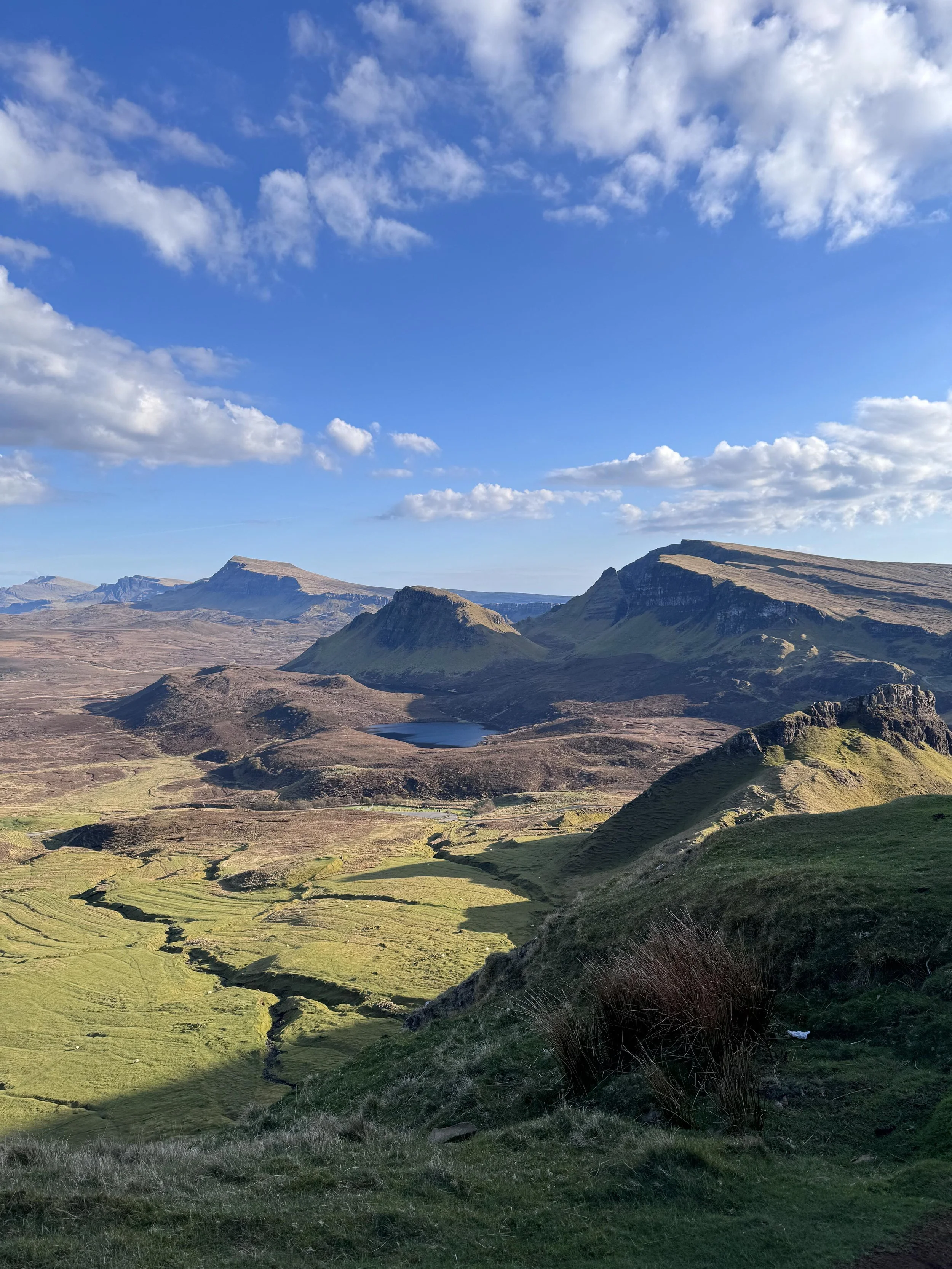
The Quiraing is one of the most recognisable landscapes on the Isle of Skye. Great slabs of rock, pinnacles and steep grassy slopes create a landscape that looks unusual even by Skye standards.
You'll get a fantastic view from the road across the Trotternish Peninsula, and for some visitors that's enough. But if you have the time and conditions are suitable, exploring the Quiraing on foot gives you a completely different perspective.
We've walked here many times with Large Outdoors groups over the years, from relatively gentle days exploring the landscape to longer walks around the Quiraing itself.
And despite its dramatic appearance, you don't necessarily need to be heading into Skye's high mountains to experience it.
What is the Quiraing?
The Quiraing forms part of the Trotternish Ridge in the north of Skye and was created by an enormous series of landslips.
Millions of years of geological movement have left behind the cliffs, pinnacles, hidden plateaux and strange rock formations that you see today.
In fact, this part of the Trotternish landslip is still moving — albeit rather more slowly than anything you're likely to notice while you're there.
What makes the Quiraing particularly interesting for walking is that you're not simply looking at the geology from a distance. The paths take you amongst it.
What does Quiraing mean?
The name Quiraing is generally thought to come from the Old Norse Kví Rand, often interpreted as “round fold”.
The traditional explanation is that the landscape's hidden areas and natural enclosures were once used to conceal cattle from Viking raiders.
It's a lovely bit of history to have in mind as you walk through the landscape, particularly when you start to see just how many folds, hollows and concealed areas there are amongst the rocks.
The Needle, the Prison and the Table
Some of the Quiraing's most distinctive features have acquired names of their own.
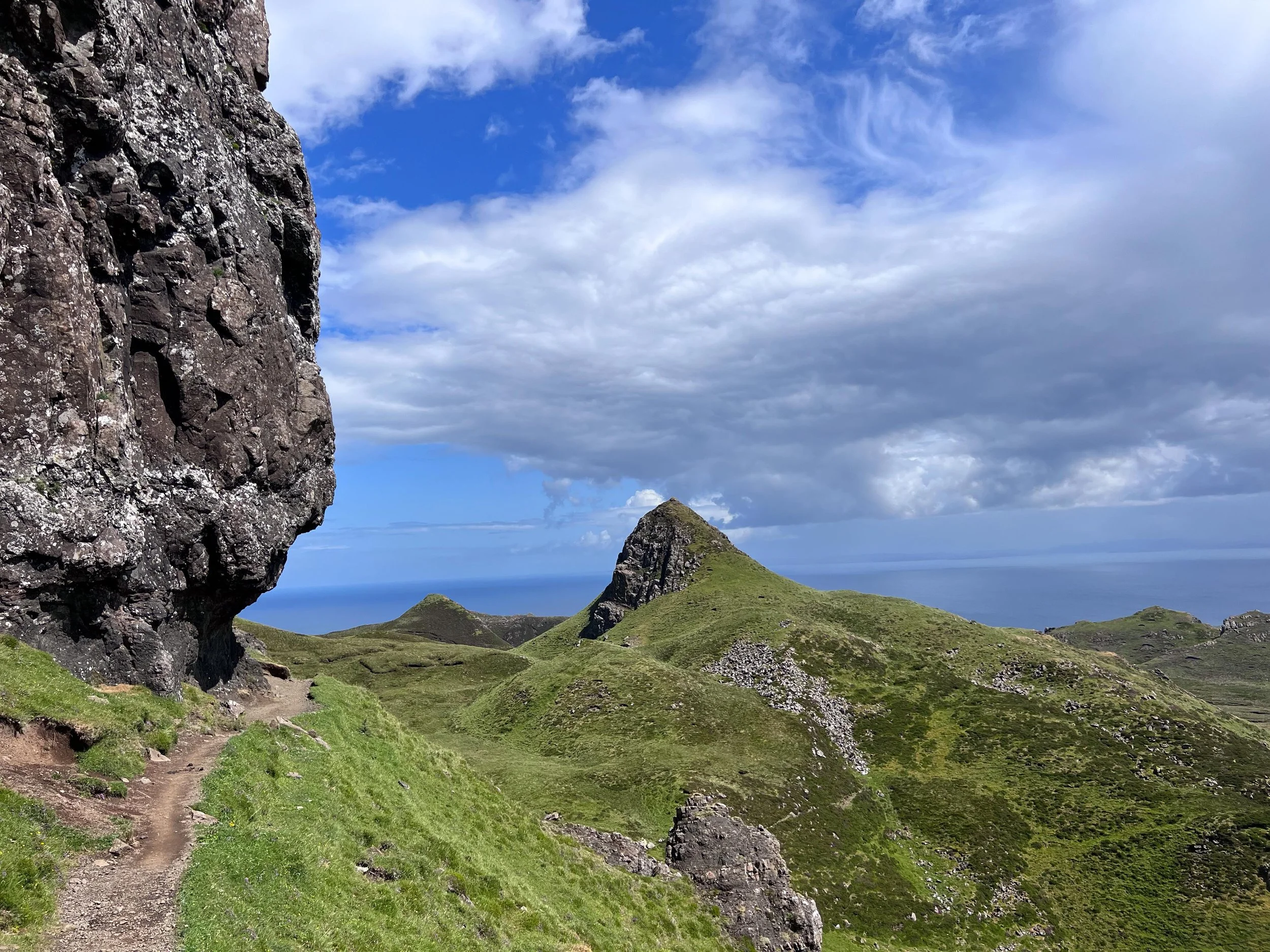
The Needle is a jagged pinnacle of rock rising prominently from the landscape.
The Prison is a huge rocky formation which, from certain angles, has the appearance of a medieval fortress.
Then there's the Table — a surprisingly level grassy area hidden amongst the surrounding rock formations.
They're good examples of why walking here is so different from simply stopping at the roadside viewpoint. As you move through the landscape, the shapes and scale of these formations constantly change.
What is walking at the Quiraing like?
This is where photographs can be slightly deceptive.
From the road, the Quiraing can look almost impossibly steep and inaccessible. Once you're on the paths, however, there are several ways of exploring the area and you don't necessarily have to tackle the complete circuit.
The terrain can be rough, muddy and uneven, and there are sections where you'll want to watch your footing. Conditions can also change quickly — this is Skye, after all.
But you don't need to rush.
One of the pleasures of walking here is simply taking your time, stopping regularly and looking back. Every few hundred metres seems to give you another completely different view.
And do remember to turn around. Some of the best views aren't necessarily in the direction you're walking.
Do you need to walk to see the Quiraing?
No.
There's a roadside viewpoint, so it's perfectly possible to experience the scale of the Quiraing without doing a substantial walk.
But I'd encourage anyone who's comfortable walking on rough paths to venture further than the car park.
Even a relatively short walk takes you away from the roadside and into the landscape itself. Suddenly you're looking across the Trotternish Peninsula, out towards the islands and up at rock formations that seemed completely different from the road.
You don't have to walk for miles to appreciate it.

How busy does the Quiraing get?
Very.
The Quiraing has become one of the best-known places on Skye and the roadside viewpoint and car park can be extremely busy, particularly during the main visitor season.
Once you start walking, however, things generally improve.
The first section of path can still be busy, but continue further and people begin to spread out. That's another reason I prefer experiencing the Quiraing as a walk rather than simply treating it as a viewpoint.
If you're visiting independently, arriving earlier or later in the day can also give you a very different experience.
My Top Tip: Don't Judge the Weather Too Quickly
One thing we've learnt from years of walking on Skye is that the weather you're looking at now isn't necessarily the weather you'll have in an hour.
The Quiraing is particularly good at disappearing into cloud and then suddenly revealing itself again.
So unless conditions genuinely make walking unsuitable, don't necessarily abandon your plans because there's cloud sitting over the ridge when you arrive.
Sometimes patience pays off.
Cloud can actually add something to the Quiraing too. Watching pinnacles and cliffs appear and disappear through the mist can be every bit as interesting as seeing the whole landscape beneath a completely clear sky.
When is the best time to visit the Quiraing?
There's no month when I'd promise you perfect conditions on Skye.
Spring and summer bring longer days, while autumn can give the landscape a very different feel. Whatever the season, the weather can change quickly.
Good waterproofs, sensible walking footwear and an extra warm layer are worth carrying even when the forecast looks reasonable.
And if the forecast gives you a completely clear, windless day on Skye?
Make the most of it.
Take plenty of photographs – but look up too
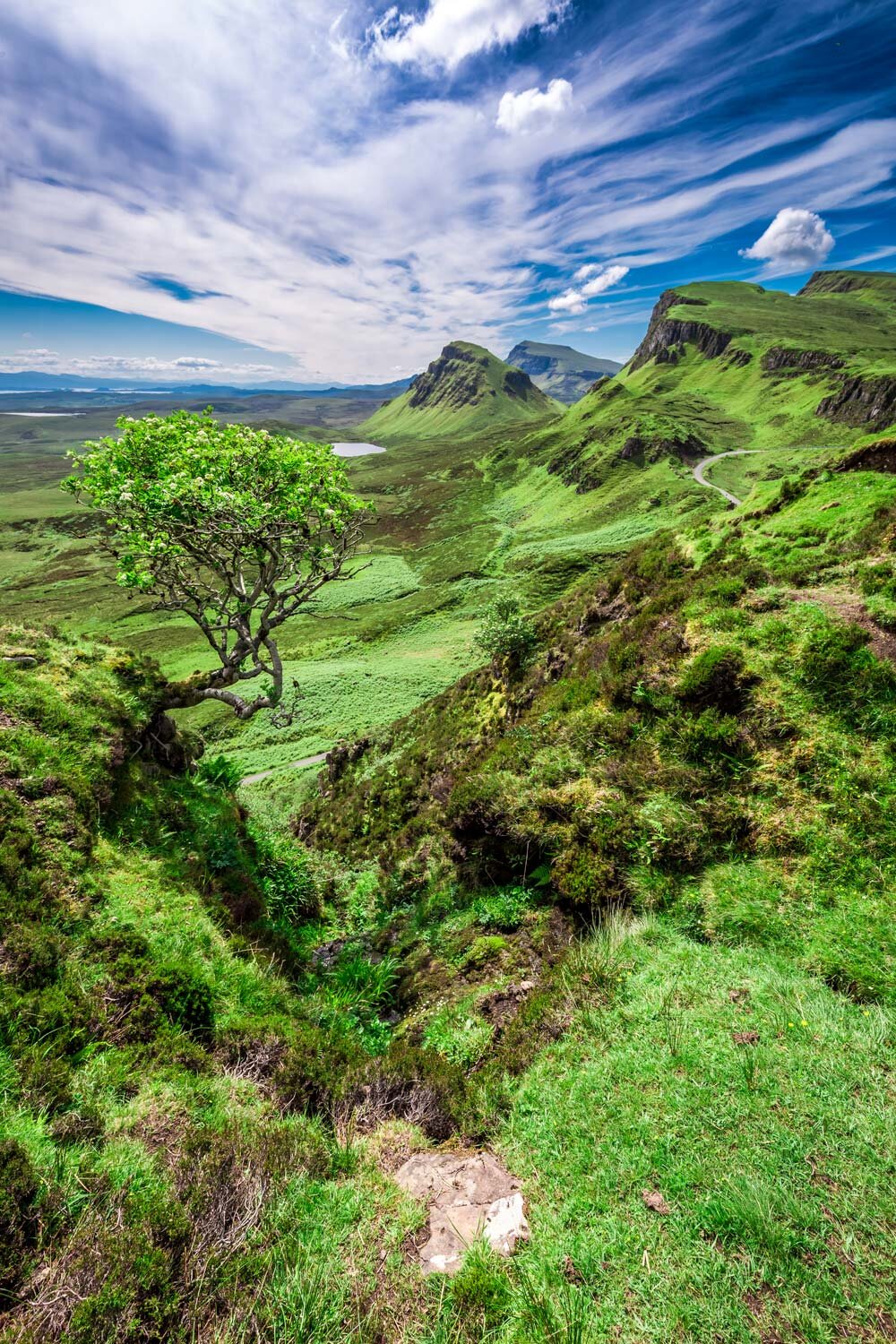
The Quiraing is ridiculously photogenic, and over the years we've accumulated a lot of photographs from Large Outdoors trips here.
But it's also very easy to spend the entire walk looking through a phone or camera.
Take your photographs, certainly. Then put the camera away occasionally and just look around.
The scale of the place is much easier to appreciate when you're standing amongst it than it will ever be from a photograph.
My Top Tip: Coffee, Cake and Toilets
If all that walking has left you hungry, there are a couple of places nearby that have become firm Large Outdoors favourites.
A short drive down the hill is The Hungry Gull at Staffin, which is one of our favourite stops for coffee and cake. There's also Corran Coffee at Staffin Harbour, which opened in 2026 and is another great option for takeaway coffee and something sweet.
There's a practical reason for remembering these two as well: both have toilets. There aren't any toilets at the Quiraing car park itself, so it's worth planning ahead before you set off for your walk.
Exploring the Quiraing with Large Outdoors
The Quiraing is one of the places we regularly explore on our trips to the Isle of Skye.
You don't necessarily need to choose one of our more challenging walking holidays either. The north of Skye works particularly well for days where the emphasis is on exploring the landscape rather than reaching a summit, so the Quiraing can feature on some of our more leisurely scenic trips as well as walking-focused holidays.
As always on Skye, the exact plan depends on the weather and conditions. We'd rather choose the best walk for the day than rigidly follow an itinerary when the island has other ideas.
Our Skye trips are small-group and fully guided, and most people come on their own.
You can see our current Isle of Skye walking holidays and upcoming trips here: