
How to Keep Your Backpack Dry on Walking Adventures
There are few things more annoying on a wet walk than discovering that the spare layers, gloves or lunch inside your backpack are soaking wet.
Most walking backpacks are water-resistant rather than completely waterproof. In prolonged rain, water can eventually find its way through the fabric, seams and zips.
The good news is that you don't need a completely waterproof backpack. A few simple precautions can keep the important things inside your rucksack dry, even on a very wet day.
What's the best way to keep a backpack dry?
For walking, we recommend protecting the contents of your backpack, rather than relying entirely on the backpack itself to keep water out.
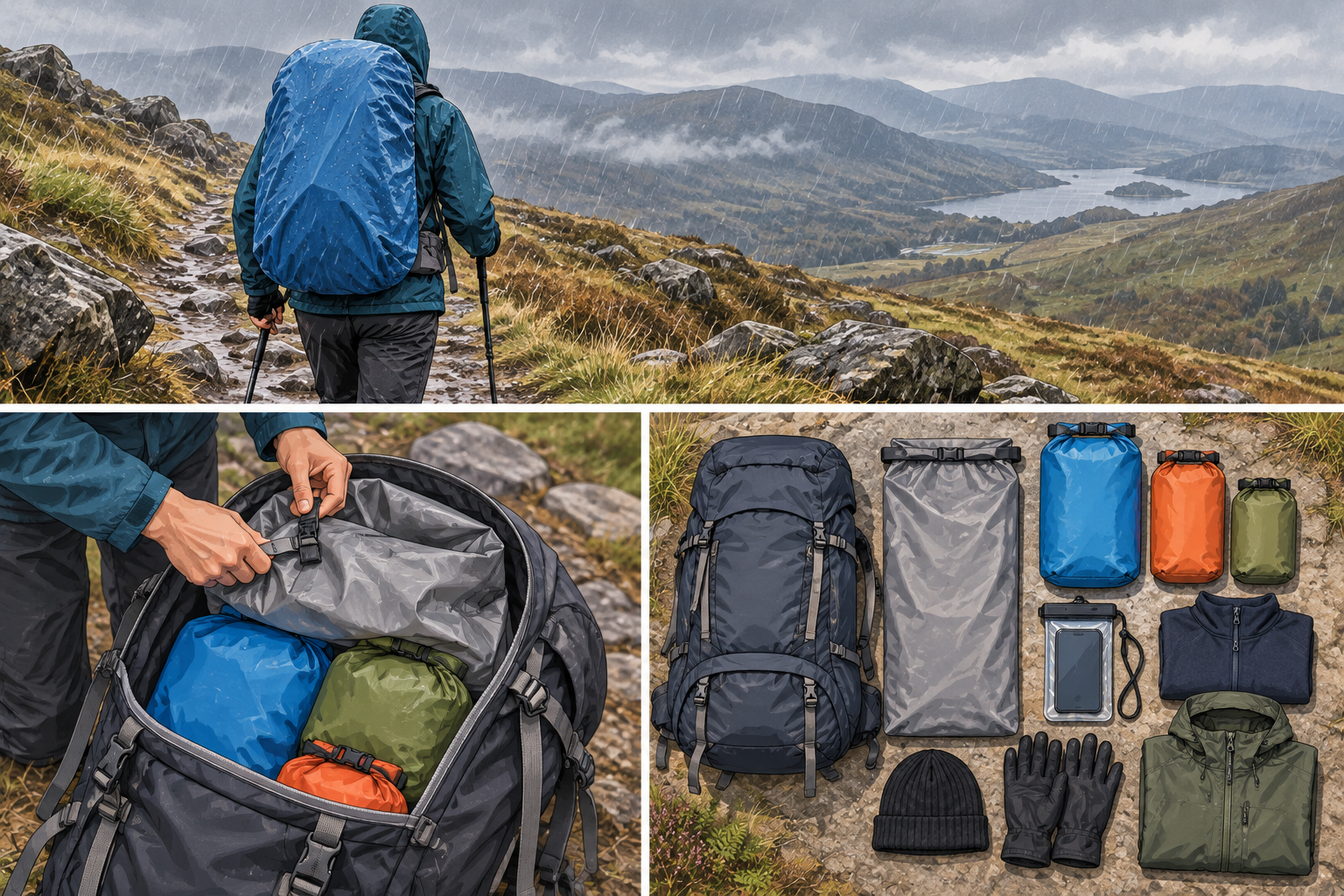
A waterproof rucksack liner or dry bags inside your backpack provide the most dependable protection. You can then add a rain cover if you want another layer of protection on the outside.
It's a simple system and means that even if your backpack gets wet, your spare clothing and other important kit should remain dry.
Use a waterproof rucksack liner
One of the simplest options is to line the inside of your backpack with a waterproof liner.
You can buy purpose-made rucksack liners, but the principle is very straightforward: the liner creates a waterproof compartment inside your backpack, keeping your kit protected even if water gets through the outer fabric.
Make sure the liner is properly closed at the top rather than simply folded loosely over your belongings.
A liner is particularly useful for protecting larger items such as spare clothing and warm layers.
Use dry bags inside your backpack
Dry bags are another very effective option and have the added advantage of helping organise your kit.
Rather than putting everything into one large waterproof compartment, you can separate your kit into smaller bags. This keeps important items dry and means you're not rummaging through your entire backpack when the weather is poor.
My top tip is to use different coloured dry bags and always use the same colour for the same kit. In my backpack, red is always my first aid kit, yellow is spare warm clothing, green is electrical items and blue is my emergency shelter.
That means when I open my backpack, I know exactly which bag I need without having to check what's inside. It's particularly useful when it's pouring with rain and you want to find something quickly.
You don't need lots of dry bags. Concentrate on the things that really need to remain dry and develop a system that works for you.
Should you use a backpack rain cover?
Rain covers are designed to fit over the outside of your backpack and many walking rucksacks come with one, often tucked into a small compartment at the bottom.
Personally, I'm not a big fan of them and don't use one myself.
They can help keep some rain off your backpack, but in strong winds they have a habit of coming loose, flapping around or blowing off completely. I've seen plenty of people spending time trying to secure them or chasing after them, and in exposed conditions a loose cover blowing around can become more of a nuisance than a help.
They also don't completely waterproof your backpack. Water can still find its way between the cover and your back, particularly during prolonged rain.
My preference is much simpler: I accept that my backpack itself might get wet and concentrate on keeping everything important inside it dry. I use dry bags for the kit that needs protecting, so even after hours of rain, it doesn't really matter if the outside of my rucksack is soaked.
If you like using a rain cover, there's nothing wrong with adding one as an extra layer of protection. I just wouldn't rely on it as your main way of keeping your kit dry.

Are waterproof backpacks worth it for walking?
Fully waterproof backpacks are available, particularly for activities where equipment is likely to get very wet.
For ordinary day walking, however, you don't necessarily need one.
A comfortable walking backpack that fits properly is more important. Using a normal walking backpack with a waterproof liner or dry bags inside is a simple and effective solution for most UK walking conditions.
If you're choosing a backpack for walking, you can also read our guide to choosing a rucksack.
[LINK TO YOUR RUCKSACK ARTICLE HERE]
Protect your phone and other valuables
Phones, keys, wallets, power banks and other electronics deserve a little extra protection.
A small waterproof pouch, dry bag or waterproof phone case is useful. A simple sealed waterproof bag can also provide an additional layer of protection.
Don't assume that putting something in the lid or zipped pocket of your backpack will keep it dry. These are often some of the first places water gets into.
How should you pack a backpack for heavy rain?
Think about what would matter most if you suddenly had to stop walking.
Your warm layers, spare gloves and other essential clothing need to stay dry, so these should be securely protected inside your liner or dry bags.
Items you might need quickly can be kept nearer the top of your backpack, but still protected from the rain.
It's also worth remembering that anything wet you've already used – such as a waterproof jacket – can make everything around it wet too. Keeping wet and dry kit separated makes life considerably easier.
What if your backpack gets completely soaked?
Don't panic if the outside of your backpack becomes saturated. That's exactly why you've protected what's inside.
Once you've finished walking, empty the backpack and allow it to dry naturally with all the compartments and zips open.
Avoid putting it directly onto a radiator or other strong heat source, as excessive heat can damage some materials and coatings.
Make sure your dry bags and liner are dry before packing everything away again too.
Our approach for a wet day of walking
You don't need an elaborate system.
For most day walks, we'd suggest:
a comfortable walking backpack
a waterproof liner or dry bags for important kit
extra protection for your phone and electronics
an optional backpack rain cover
The important thing is that your spare warm clothing and essential kit remain dry, even if the backpack itself doesn't.
If you're preparing for a Large Outdoors trip, our General Walking Kit List covers the clothing and equipment you'll need:
https://www.largeoutdoors.com/kit-list/day-walk-kit-list
Frequently Asked Questions
Are walking backpacks waterproof?
Most aren't completely waterproof. Many use water-resistant fabrics, but prolonged rain can eventually penetrate the fabric, seams or zips. Protecting the contents with a waterproof liner or dry bags is therefore a good idea.
Is a backpack rain cover enough?
We wouldn't rely on one alone. A rain cover helps protect the outside of your backpack, but water can still get behind it. Use dry bags or a waterproof liner for anything that needs to remain dry.
What's better: a rucksack liner or dry bags?
Both work well. A liner protects most of the contents in one go, while several dry bags allow you to organise and separately protect different items. Some walkers use both.
How do I keep my phone dry while walking?
Keep it inside a waterproof pouch, small dry bag or suitable waterproof phone case. Don't rely solely on an ordinary backpack pocket during prolonged rain.
Do I need a waterproof backpack for walking?
Usually not. For most day walking, a comfortable walking backpack combined with a waterproof liner or dry bags is a practical solution.