
Ticks in the UK: What Walkers Need to Know
If you spend time walking outdoors in the UK, especially through grassy fields, woodland, moorland or heathland, it’s worth knowing a bit about ticks. They’re not something to panic about, and they shouldn’t put you off getting outside, but they are something to be aware of.
Ticks are small, easy to miss, and often picked up without you noticing. Most tick bites do not cause any problems, but occasionally they can lead to illness such as Lyme disease. The good news is that a few simple habits can make a big difference.
Here’s what you need to know before your next walk.
What are ticks?
Ticks are tiny spider-like creatures that feed on the blood of animals and sometimes humans. They do not jump or fly. Instead, they sit on longer vegetation and latch on when you brush past.
They can be extremely small, especially before feeding, so it’s quite possible to pick one up on a walk without realising at the time. Once attached, they can stay in place feeding for several hours or even days if not found and removed.
Where do you get ticks in the UK?
Ticks are found all over the UK. They are most commonly associated with:
Long grass
Bracken
Woodland
Moorland and heathland
Leaf litter and scrub
Some parks and gardens
In other words, the kind of places many of us love walking.
You’re more likely to come across them if you are walking through overgrown paths, sitting in grassy areas, or brushing against vegetation. They are often discussed in relation to the Scottish Highlands and parts of southern England, but they can turn up in many outdoor areas across Britain.
When are ticks most active?
Ticks can be active at any time of year, but in the UK they are usually most active in spring and early summer, particularly from April to July. They can still be around in autumn, and milder winters can extend their activity too.
That means many of the best months for walking are also the months when it’s worth being a bit more tick-aware.
How do you know if you’ve picked one up?
Often, you don’t.
Tick bites are usually painless, which is why people often only spot them later when getting changed, showering, or scratching an itchy patch. Ticks often attach in warm or less visible places such as:
Behind the knees
Around the waistline
Groin area
Under arms
Around sock lines
Behind the ears
Hairline or scalp
After a walk, it’s a good idea to give yourself a quick check rather than assuming you’d feel it if one was there.
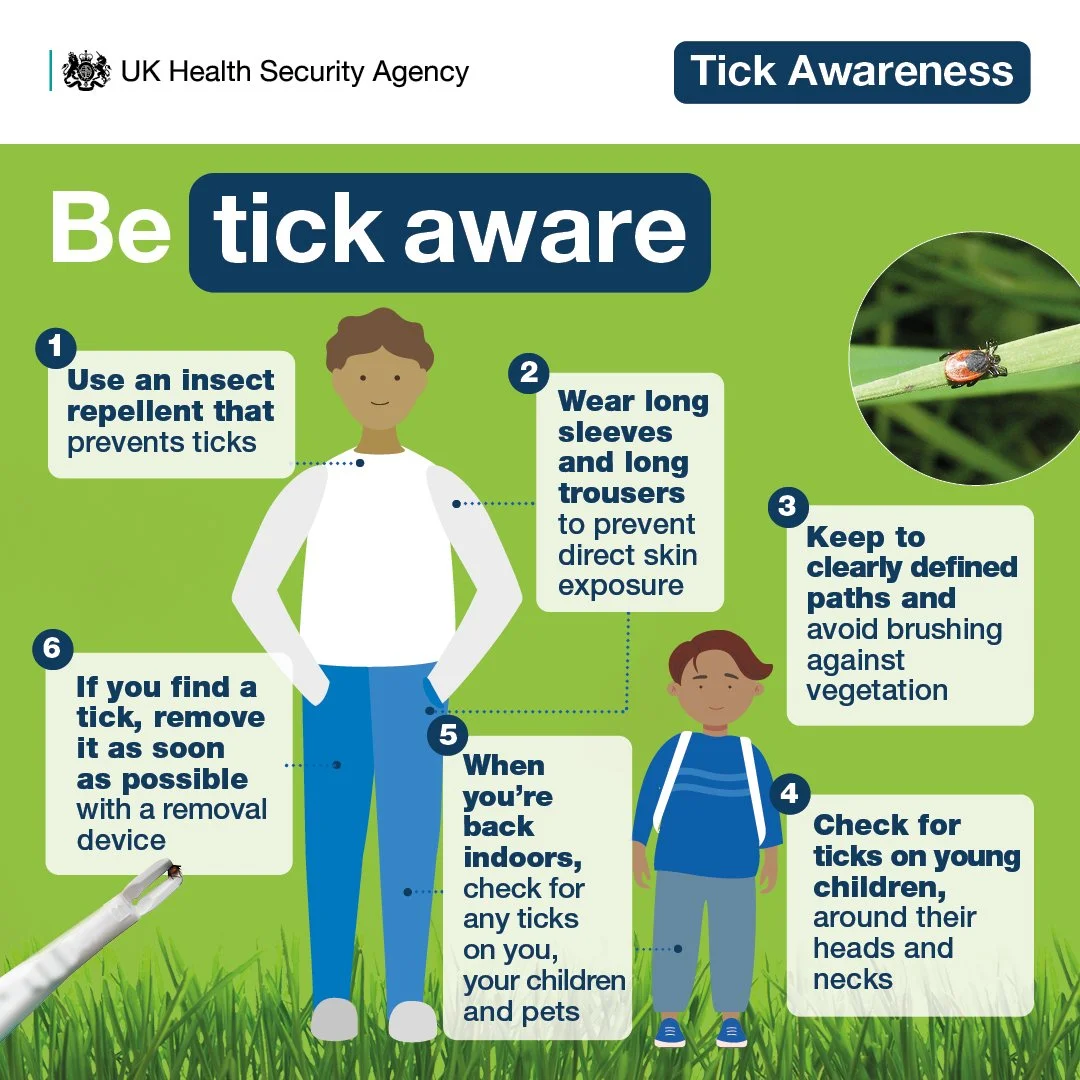
How to reduce your chances of getting bitten
You do not need to dress like you’re heading into the jungle, but a few practical choices help.
If you’re walking in grassy or wooded areas, it’s sensible to stay on clearer paths where possible rather than brushing through long vegetation. Wearing long trousers and long sleeves can also help, especially in peak tick season. Some walkers also tuck their trousers into their socks if they know they’ll be in rougher terrain.
Light-coloured clothing can make ticks easier to spot before they attach, and insect repellent containing DEET can help reduce the chance of being bitten. It’s also worth checking your clothes, legs and socks during or after a walk, especially if you’ve had a picnic stop or sat on the ground.
What should you do if you find a tick?
If you find one attached, the key thing is to remove it promptly and properly.
The safest method is to use either:
A tick removal tool, or
Fine-tipped tweezers
Grip the tick as close to the skin as possible, then pull slowly and steadily upwards. Try not to twist, yank, crush or squeeze it.
Once it’s out, clean the area with soap and water or antiseptic.
Avoid old advice like using petroleum jelly, nail varnish, alcohol, or trying to burn it off. Those methods are not recommended and can make things worse. NHS advice is to use fine-tipped tweezers or a proper tick tool and remove it carefully.
Should you keep the tick?
You usually do not need to, but some people prefer to take a quick photo or keep a note of:
Where you were walking
When you found it
Where on the body it was attached
That can be useful if you later develop symptoms and need to speak to a GP.
UKHSA also notes that commercial tick testing is not recommended as a way to decide whether you need treatment. A positive or negative tick test does not reliably tell you whether you will become ill.
What should you look out for afterwards?
Most tick bites settle down with no issue, but it’s sensible to keep an eye on the area and how you feel over the next few weeks.
A small red mark immediately after a bite can simply be a normal local skin reaction. That on its own is not unusual.
What you’re more concerned about is a spreading rash or feeling unwell afterwards. Lyme disease can sometimes cause a rash known as erythema migrans, which often appears between 1 and 4 weeks after a bite, though timing can vary. It is often described as a circular or expanding rash and is not usually itchy, hot or painful. It does not always have the classic “bullseye” look people imagine.
Symptoms to take seriously
You should speak to a GP or contact NHS 111 if, after a tick bite or after walking in tick-prone areas, you develop symptoms such as:
A spreading red or oval rash
Flu-like symptoms
Headaches
Fever or chills
Muscle or joint aches
Unusual fatigue
Nerve pain
Facial drooping or numbness
Not everyone with Lyme disease remembers being bitten, so symptoms after outdoor activity are still worth paying attention to. Lyme disease is treatable, and early recognition matters.
Do all tick bites cause Lyme disease?
No.
Not all ticks carry the bacteria that cause Lyme disease, and not every bite from an infected tick leads to illness. In fact, most tick bites do not lead to Lyme disease. But because it can happen, it’s worth taking bites seriously without becoming overly worried.
A simple tick-check routine after walks
If you walk regularly, the easiest approach is to make tick checks part of your normal routine.
When you get home from a walk:
Check your legs, socks and waistband
Look behind knees and under arms
Check your scalp or hairline if you’ve been through scrub or woodland
Shower and change clothes
Give your dog a quick once-over too if they’ve been out with you
That 2-minute check is often all it takes.
Ticks shouldn’t put you off getting outdoors
Ticks are one of those things that come with spending time in nature, a bit like muddy boots, nettle stings or damp waterproofs. They’re part of being outdoors in the UK, but they do not need to spoil your enjoyment of walking.
The best approach is simple: know where they live, reduce your chances of picking one up, and check properly afterwards.
A bit of awareness goes a long way.
In a Nutshell
Ticks are common in the UK – especially in long grass, woodland, moorland and scrub.
They are most active in spring and early summer – but can be found at other times too.
You often won’t feel a tick bite – so checking after walks is important.
Remove ticks promptly – using a tick tool or fine-tipped tweezers.
Watch for symptoms afterwards – especially a spreading rash or flu-like illness.
Most bites are harmless – but early action is always best.
Ready to Join a Walk?
If this has got you thinking about getting out for a walk, take a look at what’s coming up.
Large Outdoors runs sociable, fully guided walking breaks and holidays across the UK. Many people join on their own, and everything is organised so you can simply turn up and enjoy the walking and the company.
Browse upcoming trips and dates here:
https://www.largeoutdoors.com/events-calendar