
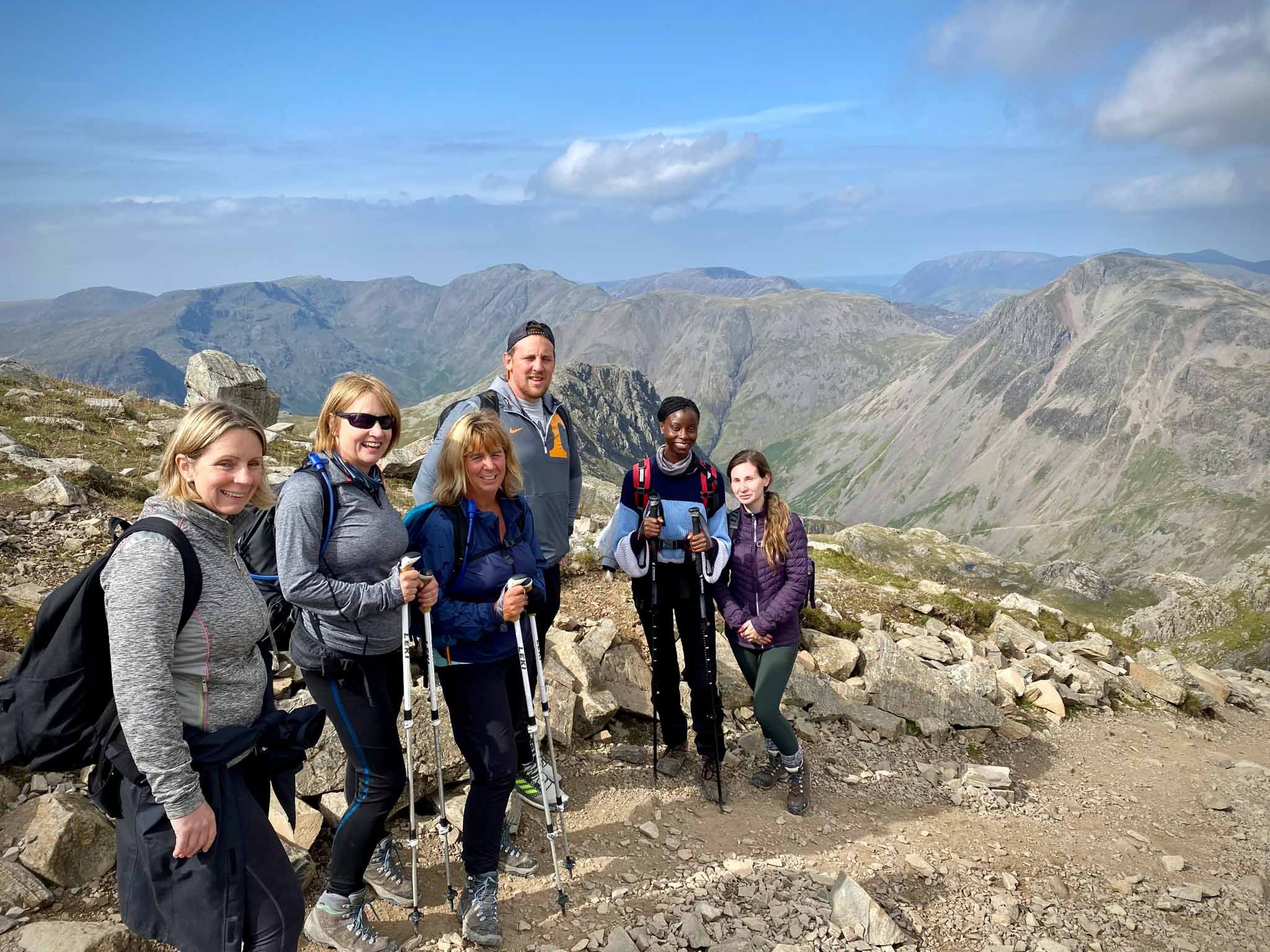
National Three Peaks Kit List – Your Complete Guide
Welcome to Large Outdoors – we’re a UK-based walking company focused on making outdoor adventures sociable, accessible, and well-organised. We run fully guided walking experiences across the country, from day walks to multi-day challenges.
Browse all upcoming walking and wild swimming trips here: https://www.largeoutdoors.com/trip-calendar
About the National Three Peaks Challenge
The National Three Peaks is one of the most famous walking challenges in the UK, involving ascents of Ben Nevis (Scotland), Scafell Pike (England) and Yr Wyddfa (Snowdon) (Wales).
Many people attempt it in 24 hours, but at Large Outdoors we take a different approach. Our National Three Peaks in Three Days experience allows you to enjoy all three peaks with proper rest, hotel accommodation each night, and meals along the way.
You can read about our trip format here:
https://www.largeoutdoors.com/national-three-peaks-in-three-days
Why Do It Over Three Days?
We think doing the National Three Peaks over three days is the best way to experience it:
You’ll walk each peak in daylight
Enjoy proper meals and rest in a bed between climbs
Reduce the stress of overnight minibus journeys
Have time to appreciate each location
If you're planning the 24-hour version, you’ll still find this kit list useful. Just be aware you’ll need additional items for the minibus, like sleeping bags and pillows, which we don't require on our trips.
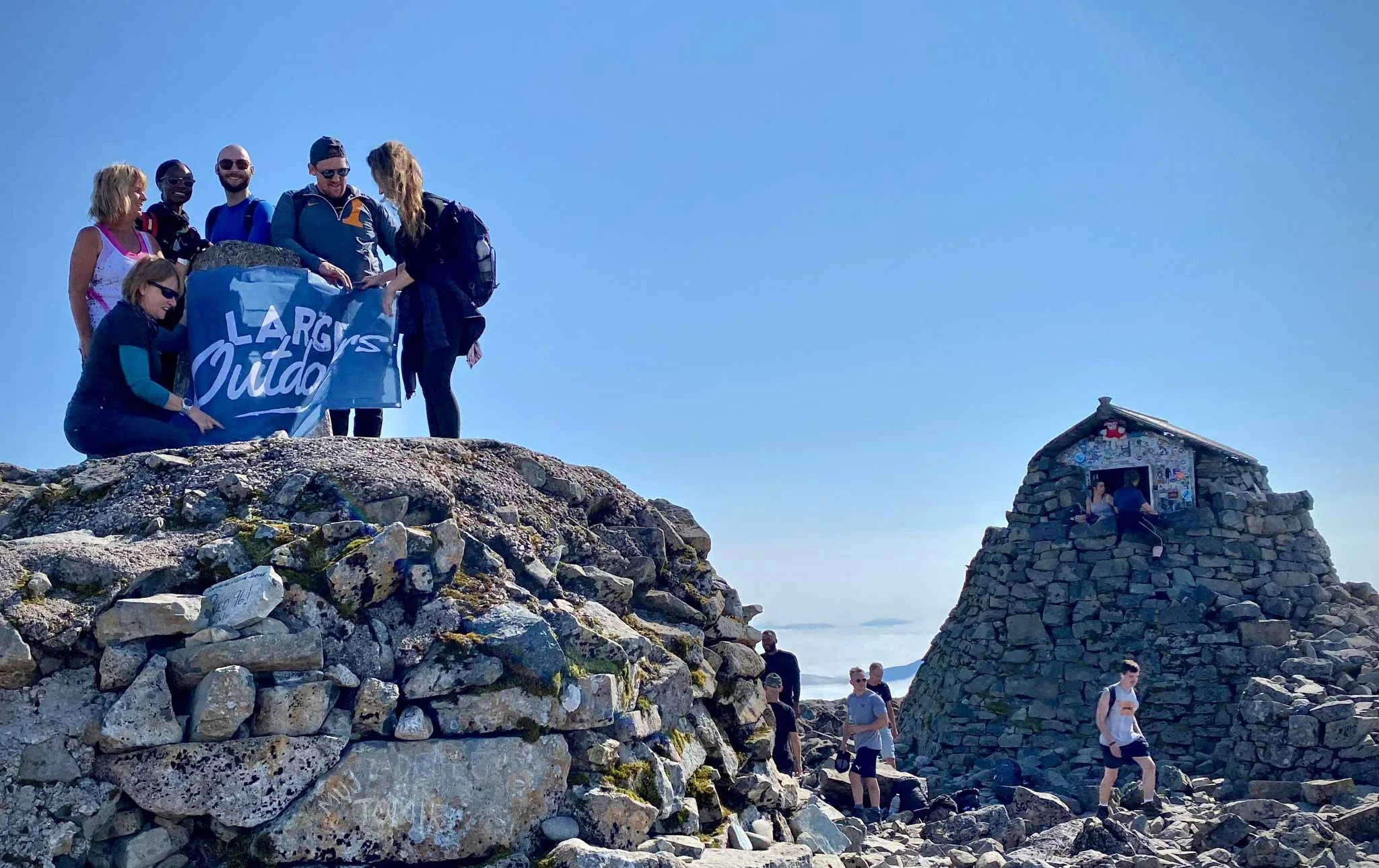
National Three Peaks Walkers on the summit of Ben Nevis in Scotland
About This Kit List
This guide explains the compulsory kit required for Large Outdoors’ National Three Peaks in Three Days trips, plus recommended extras for comfort.
Our guides check kit before each walk. We insist on this because mountain weather can change quickly, and safety is always our top priority.
Packing for the National Three Peaks in Three Days
We recommend organising two bags:
Walking Kit Bag – for all items needed on the mountains
Holdall/Other Bag – for items used between walks
Space in the vehicle is limited, so pack efficiently and avoid overpacking.
Top Tips Before You Go
Test your kit on training walks. Make sure your boots are worn in and your bag is comfortable to carry.
Check the forecast, but pack for all weathers.
Organise your bags so you can quickly grab what you need.
Avoid cotton next to the skin – it holds moisture and rubs.
Compulsory Kit – Walking Bag
These items must be with you on every peak:
Rucksack (30–35 litres recommended): Big enough for your layers, food, water, and essentials.
Dry Bags or Backpack Cover: To keep kit dry inside.
Waterproof Jacket and Trousers: Properly waterproof, not just resistant.
Walking Trousers or Leggings: Comfortable, lightweight, quick-drying.
Walking Boots: Well-fitting, worn-in boots suitable for rocky paths. Spare laces recommended.
Walking Socks: Designed to wick moisture, with padding in key areas.
Base Layer (non-cotton): Synthetic or wool to wick sweat and stay warm.
Warm Layers: Fleece or jumper, ideally with options for thicker and thinner warmth.
Hat and Gloves: Even in summer. Waterproof gloves are recommended.
Buff or Neck Gaiter: Versatile for wind, sun or cold.
Survival Bag: Not a space blanket—this is an essential for emergencies. Learn why here:
https://www.largeoutdoors.com/walking-news-blogs-galleries/what-is-a-survival-bag
Personal First Aid Kit: Include any personal meds, blister plasters, painkillers.
Head Torch: With spare batteries. Essential even for daytime walks in case of delays.
Mobile Phone: Fully charged for emergencies.
Money: Both cash and card for snacks, pubs, or in case you need to arrange transport.
Food: Bring enough for long days out. We stop at a supermarket before the first peak.
Fluids: 2–3 litres per day. Bladder systems are convenient but bottles work too.
Compulsory Kit – Other Bag/Holdall
These are for use between walks:
Wash Bag & Toiletries: Many hotels don’t supply them.
Towel: Quick-dry travel towels are ideal.
Spare Walking Clothes: Enough changes for three days without washing facilities.
Nightwear and Other Clothes: Something comfy for evenings.
Recommended Extras
These aren’t essential but many people find them helpful:
Entertainment: Book, music or podcasts for long vehicle journeys.
Ear Plugs: Useful in shared rooms or to nap in the vehicle.
Walking Poles: Reduce strain on joints. Practice before you go.
Sun Cream: Even on cloudy days.
Midge Repellent: Especially if you’re sensitive.
Gaiters: Help keep feet dry and dirt out of boots. Learn how to use them here:
https://www.largeoutdoors.com/walking-news-blogs-galleries/how-to-use-gaiters
Sit Mat: For lunch stops on wet ground.
Travel/Neck Pillow: Makes minibus snoozes comfier.
If you’ve got your kit sorted, the next step is choosing a trip.
Browse all upcoming walking and wild swimming trips here: https://www.largeoutdoors.com/trip-calendar